Have a question





Kinesiology Taping Services in London
We apply each strip with intent, subtly, specifically, and in tune with how your body speaks.

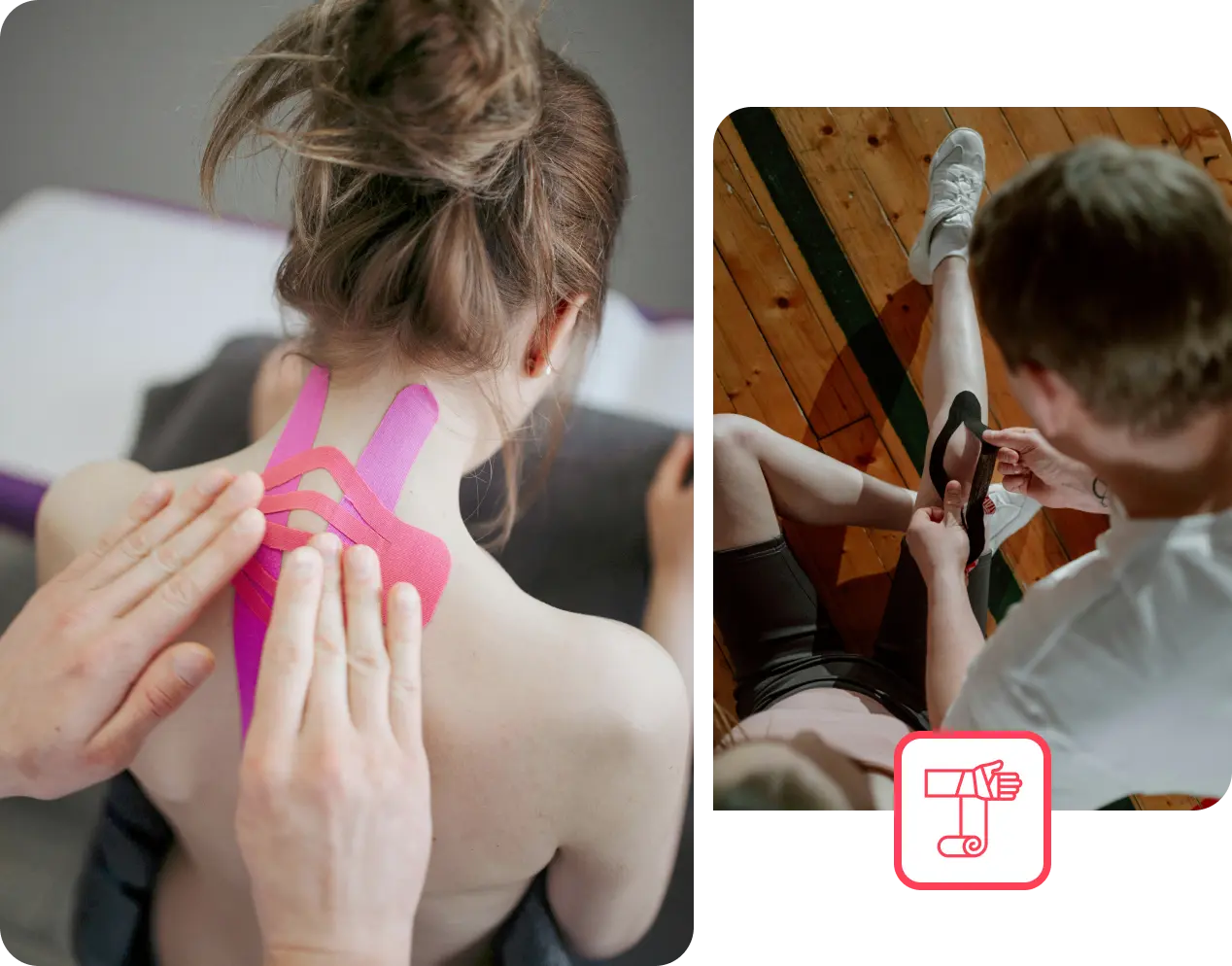
Placed with Reason, Backed by Results
Kinesio taping is a flexible physio technique that aims to modify the way the skin and structure layers underneath, such as muscles, tendons, and fascia, work. At PRAX Physio, our skilled team of physiotherapists in London combines this approach at PRAX PHYSIO with other interventions, where appropriate, to help guide physical performance in a purposeful and individualised way.
Kinesiology Taping is not used in isolation, nor is it a substitute for active care; instead, it is featured when some specific movement response or adjustment is required as part of a broader treatment plan.
Your Body, Better Aligned with our Kinesio Taping Techniques
At PRAX PHYSIO, we understand that every body is unique, and so are their needs. We use precision taping methods that target specific issues, helping with your body recovery and performance.

Tension-based taping
When muscles are tight or strained, our tension-based taping cleverly influences how tissue responds to stretch/compression. This strategy reduces problems, enhances flexibility, and re-establishes natural movement patterns.

Layer redirection
Aggression and restriction can also arise from misaligned surface mechanics.
Our layer redirection taping strategies strike a balance between these mechanics, favouring you by boosting feedback through your affected joints and muscles and increasing your proprioception.

Flow-based taping
Swelling and fluid accumulation create pressure and pain. With flow-based taping, we modify the way your body regulates blood flow and fluid shift, relieving pressure and encouraging faster recovery.
Science-Backed Kinesio taping that Guides, Supports & Heals
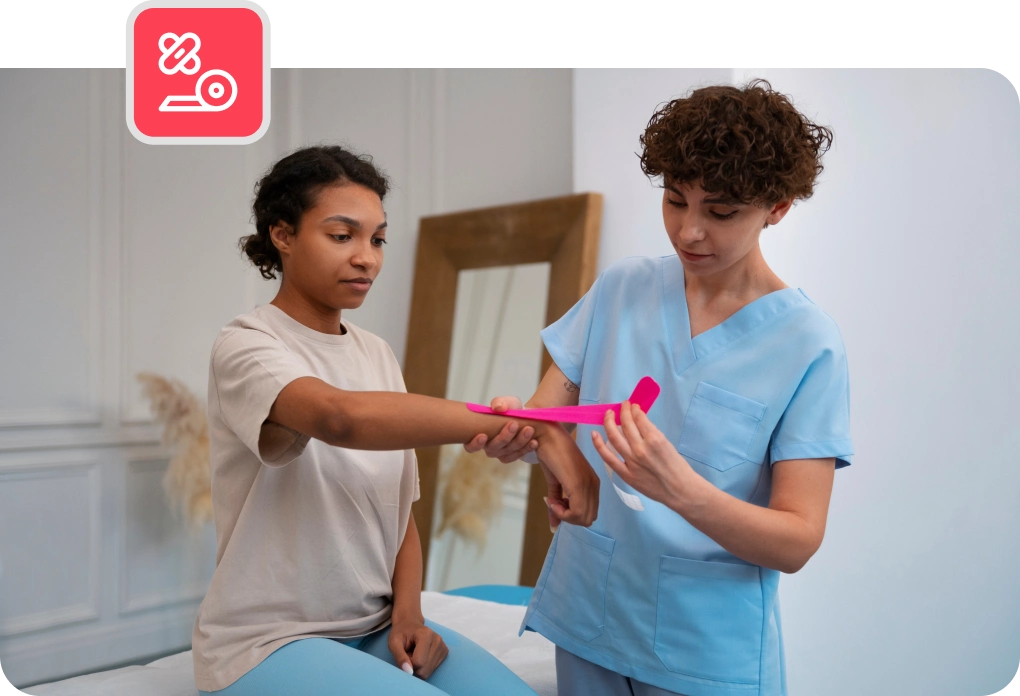
Kinesio tape differs from traditional rigid tape because it is elastic and breathable. Its gentle sensory feedback can support pain reduction and help promote better movement. Although it is not a standalone treatment, it works well alongside active rehabilitation by improving body awareness, posture, and muscle activation. When applied appropriately, Kinesio taping can assist with recovery, conditioning, and everyday activity.
Before You Tape: Checklist to know
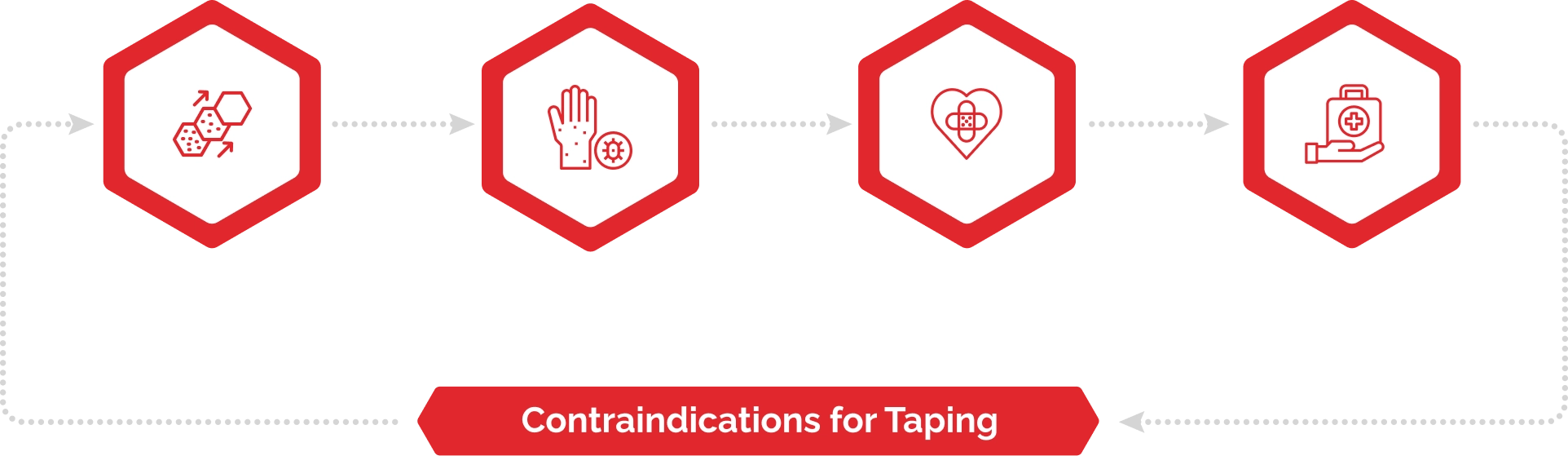
Skin Conditions
taping can exacerbate damaged, irritated,
or sensitive skin.
Allergic Reactions
adhesive may cause allergic reactions and discomfort.
Medical Conditions
certain medical conditions make taping unsafe.
Treatment Interference
taping might interfere with prescribed treatments.
Looking to experience relief and improved movement?
Book your personalised consultation with PRAX physio today towards a healthier body!
Frequently Asked Questions
Can’t find what you’re looking for?
Contact us
What is the Kinesio tape made of?
It’s breathable cotton with elastic fibres sewn in and a skin-friendly adhesive. With no latex in sight, this is safe for sensitive skin.
Does the tape or the way it's applied make the difference?
Although the tape’s stretch is important, the real impact comes from the way it’s applied, with direction, tension and placement being personal to the individual.
For how long can I wear the tape?
You normally wear the tape for around two to five days, depending on your skin, activity level and how well the tape is on.
How many uses can I get out of one roll?
One roll can be used for multiple sessions. Use will vary depending on the area covered and the size of the application.
Are the colours different?
Tape colours are purely cosmetic. There is no practical or therapeutic difference between blue, black, beige or pink.
Is it safe for kids?
Yes, taping is safe for kids when precisely assessed and applied by a trained professional and based on the child’s needs and overall physical condition.
How is this provided at PRAX Physio?
We evaluate your movement, needs, and goals, and then apply Kinesio Taping as part of a custom-made treatment plan designed to support and facilitate recovery.
What makes PRAX Physio’s approach different?
PRAX Physio is a leading physiotherapy provider in London that provides tailored services based on the patient’s body condition and needs. Our team doesn’t solely rely on tape. It’s employed purposely alongside proactive rehab approaches and to ensure outcomes that extend further than symptom alleviation.
Is Kinesio Taping combined with other therapies?
Yes. It is frequently integrated with manual therapy, physiotherapy techniques, massage, or rehab when these combinations best support your recovery goals.
If you’d like to know what works for you, reach out to us.
If you’d like to know what works for you, reach out to us.